


Parachute: Get Paid for Plasma
4.4624.00 Reviews
App Specs
- Version
- 120260727
- Updated On
- License
- Free
- Downloads
- 100,000+
- Developer
- Buoy Software, LLC
- Categories
- Medical
- Platform
- Android
Screenshots
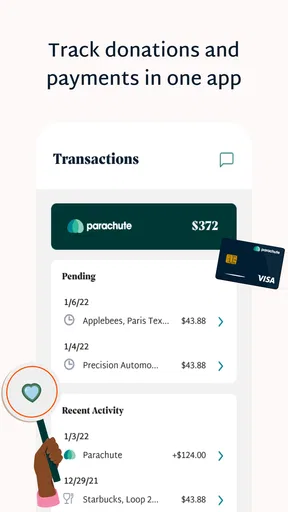
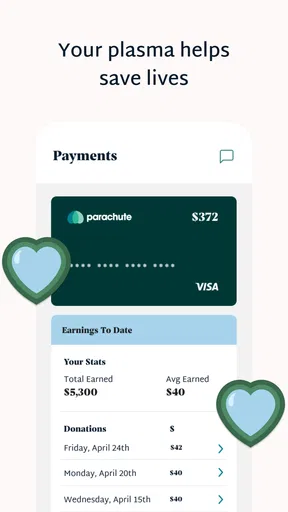
 Analysis by AppCompare
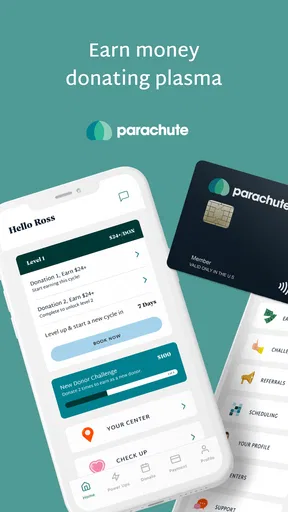
If you are considering plasma donation and want a simpler way to find participating locations, Parachute: Get Paid for Plasma is worth a closer look. I found it most useful as a practical companion to the donation process rather than as a medical education app or a general health tracker. Its central appeal is straightforward: it connects the idea of donating plasma with earning money at verified centers, while helping you approach the process with a little more structure.
That distinction matters. This is a Medical app developed by Buoy Software, LLC, but I would not treat it as a substitute for a clinician, a donation-center screening team, or official medical advice. Its value is mainly logistical and financial. If you already know that plasma donation is something you are eligible and willing to explore, the app can make the search feel more organized. If you are looking for diagnosis, treatment guidance, or detailed personal health monitoring, you are looking in the wrong place.
What Parachute offers and what its free access means
The app itself is free, which makes the first step easy for someone who is only researching the opportunity. You can investigate the service without paying for an app subscription or buying a premium package. That is the clearest part of its value: there is no purchase decision standing between curiosity and basic exploration.
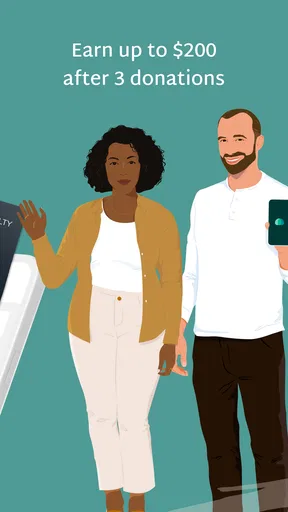
The earning message needs to be read carefully. Parachute presents the possibility of earning up to 200 dollars in 3 visits, but that is an upper promotional figure, not a guaranteed result for every person. Actual earnings can depend on the center, its current offers, your eligibility, and the conditions attached to a donation program. I would use that amount as a reason to investigate, not as money already available in my budget.
This is an important difference from a paid productivity tool. With a paid app, I expect the purchase itself to unlock a defined set of features. Here, the financial value is tied to a real-world activity outside the app. The app is free to access, but donating plasma still involves your time, travel, screening, and physical participation. In other words, the app does not create effortless income; it helps you explore an income opportunity that comes with personal commitments.
The service has attracted a meaningful audience, with over 100 thousand installs and an average rating of 4.4 from around 1.3 thousand ratings. Those figures suggest that many people find the concept useful, although they should not be mistaken for a promise that every user will have the same experience. Ratings are especially limited when an app depends on local centers and real-world eligibility.
The age classification is Mature 17+, so I would not recommend treating it as a casual app for younger teenagers. That label also reinforces the practical nature of the service: this is connected to an adult financial and medical activity, not just a rewards game. Before making plans, I would read the information presented in the app and confirm requirements directly with the relevant center.
Worth Reading Before You Choose

EA SPORTS FC Mobile 26 Is a Bigger Football Game, but It Takes Time

Flipboard Shows What News Apps Must Do Beyond the Feed

Switching to Android Auto Means Rethinking Your Driving Routine

Google Calendar Makes a Crowded Week Easier to Manage

Ludo King Makes the Most of the Minutes Between Plans

Baby Panda World Brings Quick Play to Modern Phones, but Its Game Library Feels Busy
How I would use it before making a donation plan
My first step would be to use Parachute as a discovery tool rather than immediately scheduling a visit. I would check which verified centers appear relevant, compare the practical distance from home or work, and think about whether repeated travel would make the opportunity worthwhile. A center that looks attractive financially may be a poor choice if reaching it requires a long commute, expensive parking, or time away from work.
Next, I would write down the questions that matter before visiting: what identification is needed, what screening rules apply, how compensation is handled, and whether the advertised earning opportunity has conditions. The app may help me find the opportunity, but I would still confirm the details with the center. That extra call or message can prevent a wasted trip.
A realistic example would be someone with a flexible weekday schedule who lives near a participating location. That person could use the app to identify a center, check whether the earning opportunity fits their plans, and arrange visits around work. The value comes from reducing the time spent searching and comparing possibilities. It does not remove the need to qualify, travel, wait, or decide whether the personal effort is worthwhile.
Where the app delivers practical value
The strongest benefit is focus. Instead of searching broadly for plasma donation information and then trying to separate relevant centers from unrelated results, Parachute is built around the specific goal of finding places connected with paid plasma donation. That narrower purpose can be helpful when I already know what I want to investigate.
I also like the way the app frames the decision around verified centers. That wording gives the search a more practical starting point than relying on random advertisements or informal posts. Still, I would not let the word “verified” replace my own checks. Center information, availability, and compensation conditions can change, so I would confirm the current details before traveling.
Another useful insight is that the app can help with decision quality, not just discovery. I would compare the potential payment with the total cost of participation: transportation, parking, time, and the possibility that screening may prevent a donation. This calculation is more realistic than looking only at the largest advertised amount. For someone nearby, the opportunity may be sensible. For someone far away, the same offer may not justify the effort.
There is also value in using the app as a planning checkpoint. I would avoid treating a first successful visit as proof that the process will always be convenient. Instead, I would consider whether the schedule can fit repeated visits and whether the routine is comfortable enough to continue. The earning figure is presented around multiple visits, so the practical question is not merely “Can I go once?” but “Can I realistically follow through?”
For a person who has never donated plasma, this approach is more useful than jumping straight from an advertisement to a booking. I would use the app to narrow down the options, then use official center guidance for the medical and procedural details. That division of responsibility keeps the app in its proper role.
Tradeoffs that are easy to overlook
The largest limitation is that a free app does not mean a cost-free experience. You pay with time, travel, and physical effort rather than with an app-store purchase. Someone expecting quick, passive earnings could be disappointed. The app can point toward an opportunity, but it cannot guarantee that the opportunity will fit your health, schedule, or local circumstances.
Eligibility is another important tradeoff. A person may be interested and still not be accepted at a center. Screening decisions belong to the donation process, not to my personal assumption based on what I see in an app. I would therefore avoid arranging expensive travel or taking time off work until I had checked the relevant requirements.
The promotional ceiling of up to 200 dollars in 3 visits can also influence expectations. I would not calculate rent, bills, or regular income around that figure. It is better viewed as a possible introductory incentive or earning opportunity whose real usefulness depends on the applicable terms. A lower actual return, an unsuccessful screening, or an inconvenient schedule can change the calculation quickly.
Another tradeoff is that a specialized app may be more convenient than a general web search, but it may not answer every question I have. For medical concerns, a healthcare professional is the better source. For exact center procedures and current compensation, the center itself is the better source. For comparing travel time, I may still need a map or calendar. Parachute is most effective when it is one part of a sensible workflow rather than the only tool I use.
I would also be cautious about privacy and personal comfort before entering information into any service connected with a medical activity. I would read the app’s current permissions and privacy explanations myself and share only what is necessary for the task. That is not a criticism unique to Parachute; it is simply good practice whenever an app relates to health, identity, and payment.
The app’s current version is 120260727 and it supports Android 7.0 or later. That makes it accessible to people using older compatible Android devices, although I would still keep the app updated through the official store. A compatible operating system does not guarantee that every phone will feel equally smooth, so users with older hardware should keep their expectations practical.
Who is most likely to get value from it
Parachute is a good fit for an adult who is already open to plasma donation, lives within reasonable reach of a participating center, and wants to investigate compensation without paying for an app. It is especially useful for someone comparing whether the opportunity fits into an existing routine. A flexible worker, student over the relevant age, or person with reliable transportation may find the planning aspect more valuable than someone who simply wants a one-time reward.
I would also recommend it to people who prefer a focused starting point. Searching the internet can produce a mixture of donation centers, medical articles, advertisements, and outdated discussions. A dedicated service can reduce that initial clutter. The important habit is to use the app to identify possibilities, then verify the details before committing.
It is less suitable for someone seeking guaranteed income. The phrase “up to” should immediately signal that the maximum is not the expected payment for every user. It is also not the right choice for a person who needs medical advice, wants to track symptoms, or expects an app to determine whether donating is personally safe. Those decisions require qualified professionals and the center’s screening process.
I would skip it if the nearest available center is too far away or if the schedule would create more expense than value. I would also avoid making it a priority if I am uncomfortable with plasma donation itself. No amount of app convenience changes the fact that this is a real-world medical donation process. The app can improve discovery, but it cannot make an unsuitable activity suitable.
How it compares with the usual alternatives
The usual alternative is a general web search. That approach can be more flexible and may provide broader background information, but it often requires more effort to sort useful center information from promotional material and outdated pages. Parachute’s advantage is specialization: it starts with the paid plasma-donation question instead of making me build that search from scratch.
Another alternative is contacting donation centers directly. That remains the strongest option for current eligibility rules, appointment details, screening questions, and exact compensation terms. The drawback is that I have to find the centers myself and contact them one by one. I would use Parachute for discovery and direct contact for confirmation, because those tools serve different purposes.
General rewards apps are a weaker comparison. They may offer small tasks that can be completed from home, but they do not address plasma donation or center selection. Their convenience may be better for someone who wants no travel or medical screening. Parachute offers a more specific opportunity, but the commitment is correspondingly greater.
A health app is also not a direct substitute. Health trackers and medical reference tools may help with wellness information, but they are not designed around finding paid plasma donation centers. If my goal is earning through donation, Parachute is more relevant. If my goal is understanding a health concern, I would choose a medically focused resource instead.
My buying decision and final recommendation
Because access is free, I see little financial downside to trying Parachute as a research and discovery tool, provided I approach the earning claims realistically. The meaningful cost is not the download; it is the time, travel, screening, and physical commitment that follow. That makes the right decision highly personal and local.
I would recommend it to someone who wants a focused way to explore paid plasma donation and who is prepared to verify every important detail before visiting a center. I would not recommend using it as a promise of guaranteed cash, a medical authority, or a replacement for direct communication with the donation location.
My practical advice is to start with the nearest realistic center, calculate the complete cost of getting there, and treat the maximum earning figure as a possibility rather than a budget. Keep a simple note of travel expenses, time spent, and the information you confirm. That will tell you more about the app’s real value for your situation than the headline incentive alone.
Overall, Parachute: Get Paid for Plasma makes sense when its role is kept clear. It is a free, specialized starting point for adults exploring compensated plasma donation, backed by a solid user rating and a growing install base. Its best feature is not that it turns donation into effortless money; it is that it can make the first stage of the search more direct. If that is what you need, I think it is worth trying. If you need certainty, medical guidance, or income without personal commitment, I would skip it and choose a different kind of service.
Pros
- Can turn regular donation appointments into a source of extra income.
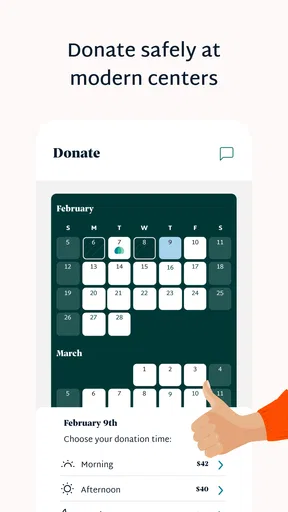
- Plasma donation centers and appointment details are organized in one place.
- Useful for tracking donation frequency and staying aware of eligibility timing.
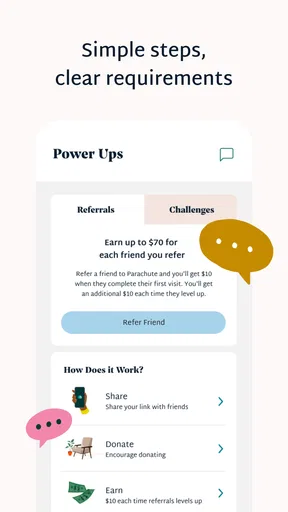
- May offer referral bonuses or promotional rewards in addition to donation payments.
- A practical option for users comfortable with recurring donation routines.
Cons
- Availability and payment amounts vary significantly by location and donation center.
- Requires meeting health
- age
- weight
- and identification requirements before donating.
- Frequent donations can be time-consuming and physically tiring for some users.
- The app cannot guarantee appointment availability or immediate payment processing.
- Personal and health-related information may be required during registration.
FAQs for Parachute: Get Paid for Plasma
What is Parachute: Get Paid for Plasma?
Parachute: Get Paid for Plasma is an app designed to help users find and manage plasma donation opportunities while learning about potential compensation. It may provide information about nearby donation centers, eligibility requirements, appointments, and payment-related details. The app itself does not replace a medical screening or guarantee acceptance, since every donation center makes its own decision based on health, identity, and regulatory requirements.
How does Parachute help me earn money from plasma donation?
The app can help you discover participating plasma donation locations and understand the steps involved in making an appointment. Compensation is generally provided by the donation center after a successful donation, not simply for downloading or using Parachute. Payment amounts, promotional bonuses, frequency limits, and withdrawal methods can vary by location and donor eligibility, so users should confirm the current terms directly with the selected center.
Who can use Parachute and donate plasma?
Parachute may be useful for adults who are interested in locating plasma donation opportunities, but using the app does not mean that everyone will qualify to donate. Donation centers commonly check age, weight, identification, residency, medical history, medications, and general health. Requirements differ depending on local laws and the center’s policies, so review the eligibility information carefully and expect an in-person medical screening.
Is Parachute safe, and what personal information does it require?
As with any app connected to appointments, rewards, or healthcare-related services, review Parachute’s privacy policy before creating an account. The app may request information such as your name, contact details, location, or identification-related data to match you with donation centers. Download it only from an official app store, use a strong password, and avoid sharing sensitive information through unofficial messages or suspicious links.
What should I know before booking a plasma donation through the app?
Before scheduling, make sure you understand the center’s location, operating hours, eligibility rules, required documents, compensation policy, and cancellation terms. Bring the identification and other paperwork requested by the facility, and answer health questions honestly. Plasma donation can involve needles, temporary bruising, dizziness, or fatigue, so follow the center’s preparation instructions and speak with qualified medical staff if you have concerns.


